: Engravings on leather
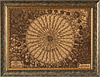
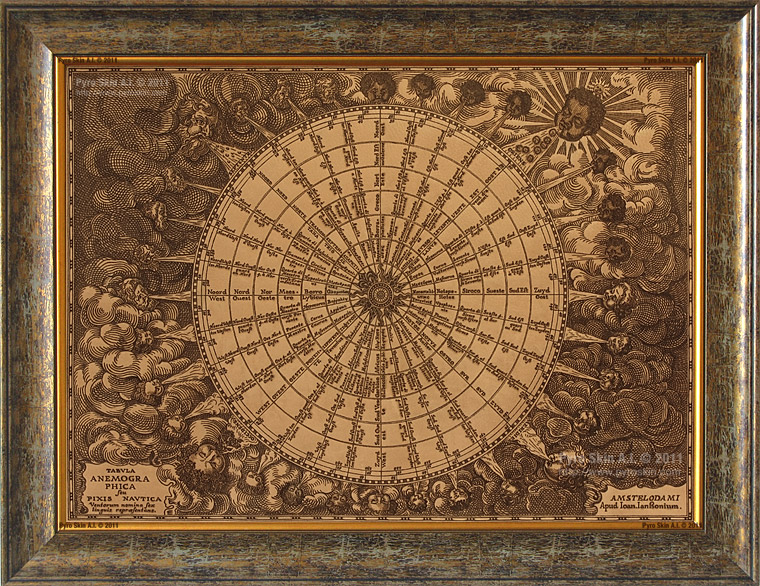
: Tabula Anemographica Seu Pixis Nautica
: 2011
: pe.0002.05
: Pyro Skin A.I.
: walnut frame
: 640 mm x 500 mm
: Allegorical engraving
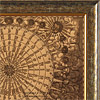
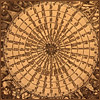
: Rare engraved wind chart showing the compass disc divided in 32 sections, with text in six languages (Dutch, Spanish, French, Italian, Latin and Greek). Surrounding the compass are 31 small cherub heads arranged in successive ages from young to old, and four large heads, blowing winds on the compass and seasons. Very attractive original artwork. Artwork recreated as framed handmade vellum pyro engraving.
: In ancient times, before the magnetic compass was invented, winds were used by mariners to designate direction, and were named after the lands or astronomical directions from which they originated. Over the centuries, the number of named winds increased progressively from the original four cardinal directions to as many as thirty-two, with a confusing array of names based on mythological gods, associated astronomical or weather conditions, and in Greek, Latin, and other languages. Adding to the confusion, different names were often applied to the same direction, and sometimes a single name was used for different directions. To clarify this chaotic situation, a schematic diagram called a "wind rose" was developed and was widely adopted as a useful and often decorative addition to maps and charts. The colorful example seen here displays thirty-two winds with their various names, along with imaginative "wind heads" or "wind blowers" surrounding the central diagram. The wind rose was eventually replaced by a similar but more precise "compass rose" displaying directions as determined by a magnetized needle.
:Download
:Download
:Download
:Download
:Download
:Download
:Download
:Download
:Download
 Esoterik
 Handgemachte Tarotkarten
 Tarotkarten und Orakel
 Tarot Taschen & Koffer
 Glücksspielzubehör
 Diaries and journals
 Futharks Runen, I-Ching
 Kerzen & organische Farbstoffe
 Spirituelle Ouija-Bretter
 Rituelle Tische und Tücher
 Schatullen, Tuben, Gefäße
 Puppen, Amulette, Talismane
 Handgemachte Kunst
 Unique handmade collection
 Geschenke
 Postkarten, Kalender, Lesezeichen
 Gift certificate scrolls
 Leather tubes
 Esoteric coffee mugs
 Rare banknotes & stamps
 Preisrabatte
 Persönlicher Bereich
 Mein Konto
 How to place an order?
 Following my order
 Cancel my order
 Payment methods
 Delivery services
 Wholesales options
 Frequent questions(FAQ)
 Guarantees & Quality
 Impressum
 Contact information
 Website Condition of Use
 Privacy Policy Statement
 Copyright Information